Not a Filler. Not a Facial.
Polynucleotides work on skin quality rather than on volume, which is why the change is in how your skin behaves rather than in how much of it there is.
What Polynucleotides Actually Do
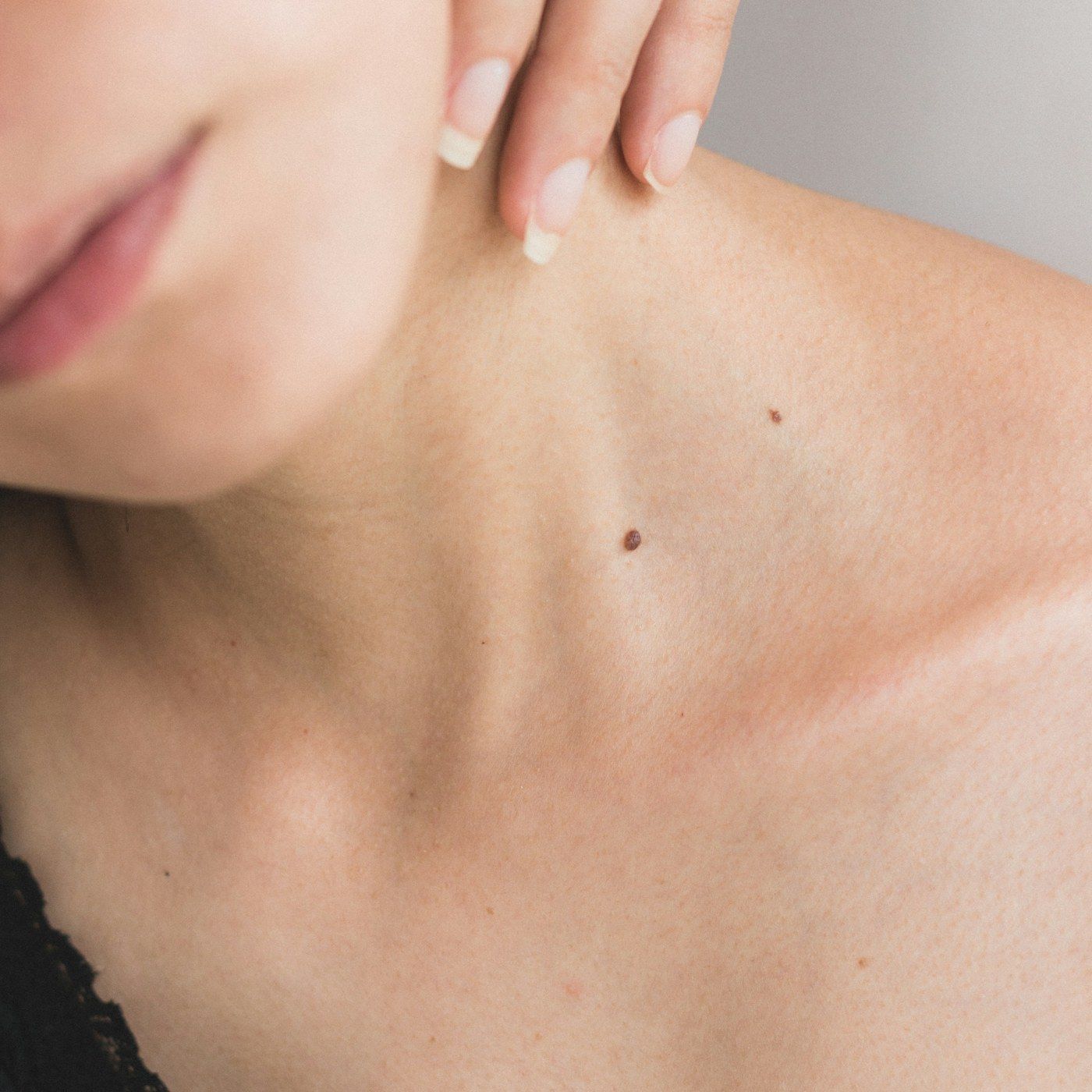
Polynucleotides are fragments of DNA, purified and prepared for medical use. They are not a filler and they do not add volume. Placed into the skin, they act as a signal that supports the skin's own repair activity and its ability to hold water.
That makes this a skin quality treatment rather than a contouring one. The change people report is in how their skin behaves: better hydration, a smoother surface, less of the fine crepey texture that no cream reaches, particularly in delicate areas such as under the eyes.
It sits well alongside other work rather than replacing it. If your problem is a fold or a loss of structure, filler is the honest answer. If your problem is that your skin itself looks thin, dry and tired, this is a far better use of your money.
Consider This If Your Complaint Is the Skin Itself
If what bothers you is volume or a line with structure behind it, we will point you at the treatment that actually addresses that.
Three Steps, Start to Finish
We Look at Skin Quality Specifically
This is a different assessment from a volume assessment, and conflating the two is why people end up with the wrong treatment.
Placed in a Short Series
Small amounts are placed across the area in a course rather than in one heavier session, because the effect is cumulative.
Reviewed and Maintained
We assess after the course and set a maintenance interval based on what your skin actually did, not on a schedule.
Quality and Volume Are Different Complaints
Adding volume to skin that is thin and dry gives you fuller thin dry skin. The order matters.
What the Days and Weeks Look Like
Why DNA Fragments at All
Polynucleotides are chains of nucleotides, the same building blocks your cells use, purified to medical grade. Introduced into the dermis they behave as a biological signal that supports fibroblast activity and helps the tissue hold water, rather than occupying space the way a gel filler does.
Because the mechanism is supportive rather than structural, results build over a course and are measured in skin quality: hydration, elasticity, surface smoothness. Expecting a lift or a volume change from this treatment is expecting the wrong thing from it.
Risks are those of any injectable into skin: bruising, swelling, small nodules, and infection if aftercare is neglected. Preparations are derived from biological sources, so we take a full history before treating and we will not proceed if there is a relevant allergy or an active skin infection in the area.
What People Ask Us First
No. Filler adds volume by occupying space. This adds no volume at all. It works on the quality of the skin itself, which is a different complaint with a different solution.
They share a goal and not a mechanism. PRP uses components drawn from your own blood. Polynucleotides are a purified, prepared product. Both are used to support repair and we will explain which suits your case.
Typically a short series spaced a few weeks apart, then maintenance. You will get a realistic number at the consultation rather than an open ended schedule.
It is one of the areas where skin quality treatment makes the clearest difference, because the skin there is thin and shows it. Bruising is more likely in that area and we will tell you so beforehand.
The support is not permanent and the skin continues to age. Most people maintain at intervals. We will set that interval after seeing how your skin responded to the first course.
Often Considered Alongside This
Tell Us Whether It Is the Skin or the Structure.
Once that is clear the right treatment is usually obvious, and it is often not the one you came in asking for.
4211 N. Buffalo Road, Suite 15, Orchard Park, NY 14127
