Your Plasma, With Structure
Processed so it holds its shape after placement, which lets it do things liquid plasma cannot.

Same Source, Different Preparation
EZ Gel is made from your own blood, like platelet rich plasma, but the preparation is different. The plasma is heated and cooled in a controlled way, which converts the fibrinogen in it into a gel with real structure rather than leaving it as a liquid.
That structure is the point. A gel stays where it is placed and provides some immediate support, while continuing to release growth factors into the surrounding tissue as it is gradually absorbed. You get a degree of the placement behavior associated with a filler and the regenerative signaling associated with plasma, from a material that is entirely yours.
It is fully resorbed over time, which is both its main limitation and part of its appeal. Nothing permanent is placed, and there is no product to dissolve if you change your mind.
A Good Fit If Any of This Sounds Familiar
This is not a replacement for every filler and we will say so if a different approach fits your goal better.
Three Steps, Start to Finish
A Blood Draw and a Controlled Process
The plasma is drawn, then heated and cooled in a specific sequence. This is what turns liquid into gel.
Placed Where It Is Needed
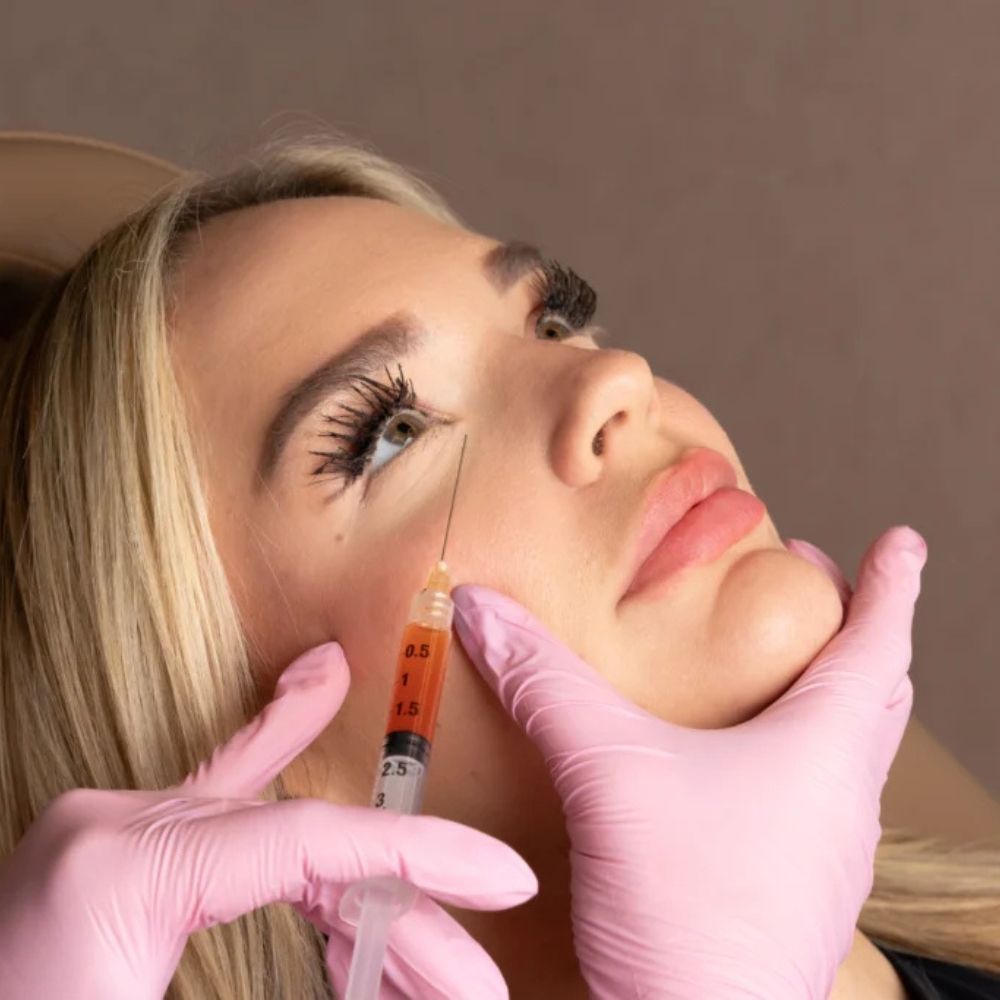
Placement technique for a gel differs from placement of a liquid. Depth and volume are chosen deliberately.
We Review at Six Weeks
Some of the effect is immediate and some builds. Six weeks is the first fair point to judge it.
Nothing Synthetic. Nothing Permanent.
It came from you, it supports while it is there, and it is gone entirely when it has finished working.
Immediate, Then a Dip, Then Better
Fibrin, Heat and Why It Gels
Plasma contains fibrinogen, a soluble protein that is the precursor to fibrin, the scaffold your body uses to build a clot. Controlled heating and cooling denatures and cross links it into a stable gel without adding anything to the sample.
That fibrin scaffold does two jobs at once. Mechanically it occupies space and provides support. Biologically it acts as a matrix that holds growth factors in place and releases them into surrounding tissue over time, rather than letting them disperse as a liquid injection would.
Because it is autologous and fully biodegradable, the safety profile is different from a synthetic filler. The trade is duration. It does not last as long as a hyaluronic acid product, and if longevity is your priority we will tell you that plainly rather than let you find out in six months.
What People Ask Us First
Not in the conventional sense. It provides some structure like a filler does, but it is made from your own plasma, it is fully resorbed, and it works partly by signaling rather than only by occupying space.
Less time than a hyaluronic acid filler. It is absorbed over months, and part of the result persists as collagen your own tissue built. We will give you an honest range rather than the most flattering number.
There is nothing to dissolve. It is your own material and it resorbs on its own, which is one of the reasons cautious patients prefer it.
Possibly. Any injection into thin tissue carries that risk, and the area under the eyes bruises more readily than most. We will tell you how to minimize it and how long to allow before anything important.
Yes, and it often is. Gel provides structure while liquid plasma or needling addresses surface quality. Whether the combination is right for you is a conversation.
Often Considered Alongside This
Structure and Signal, From Your Own Blood.
Come in and we will tell you whether this or a conventional product is the better answer for what you want to change.
4211 N. Buffalo Road, Suite 15, Orchard Park, NY 14127
